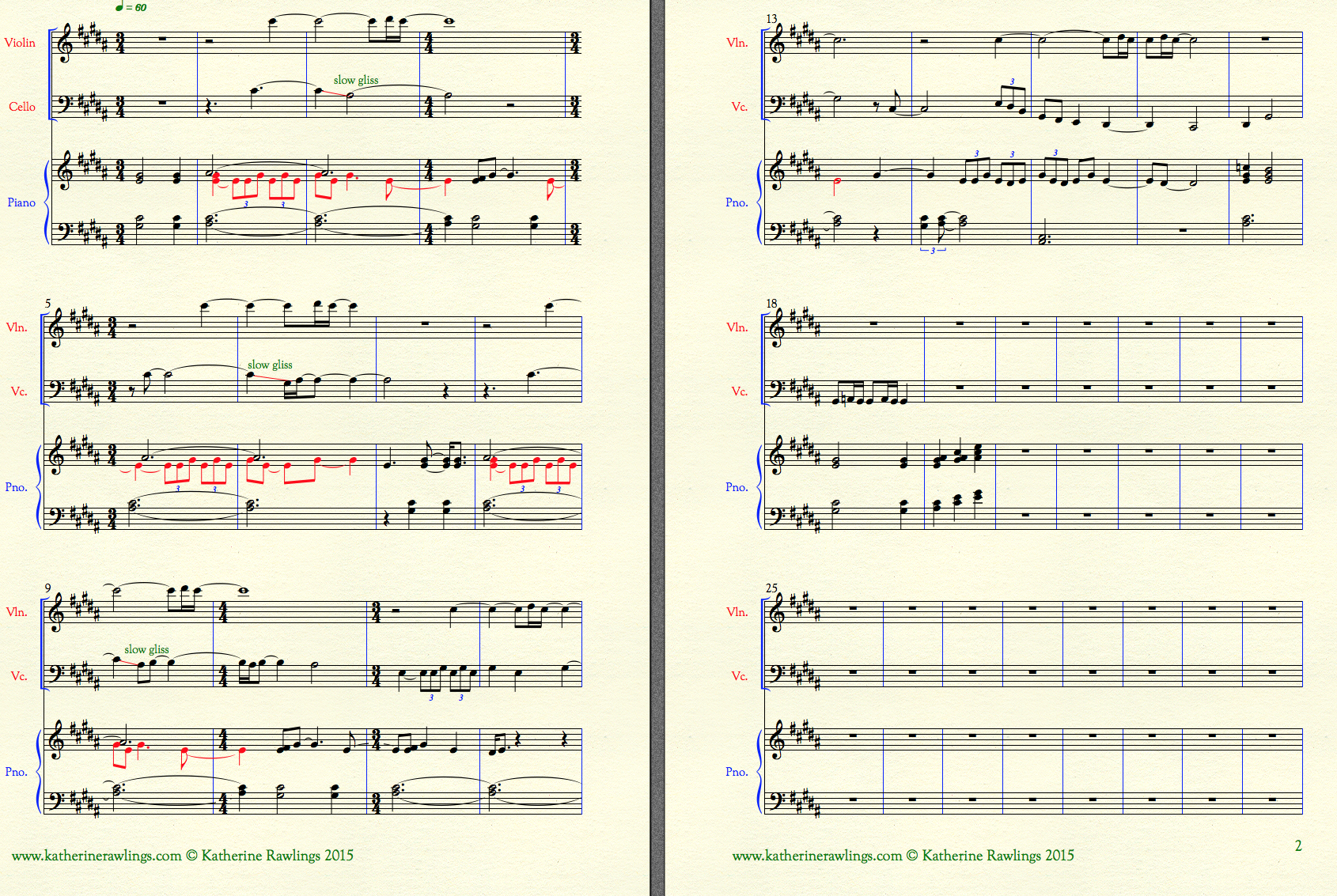
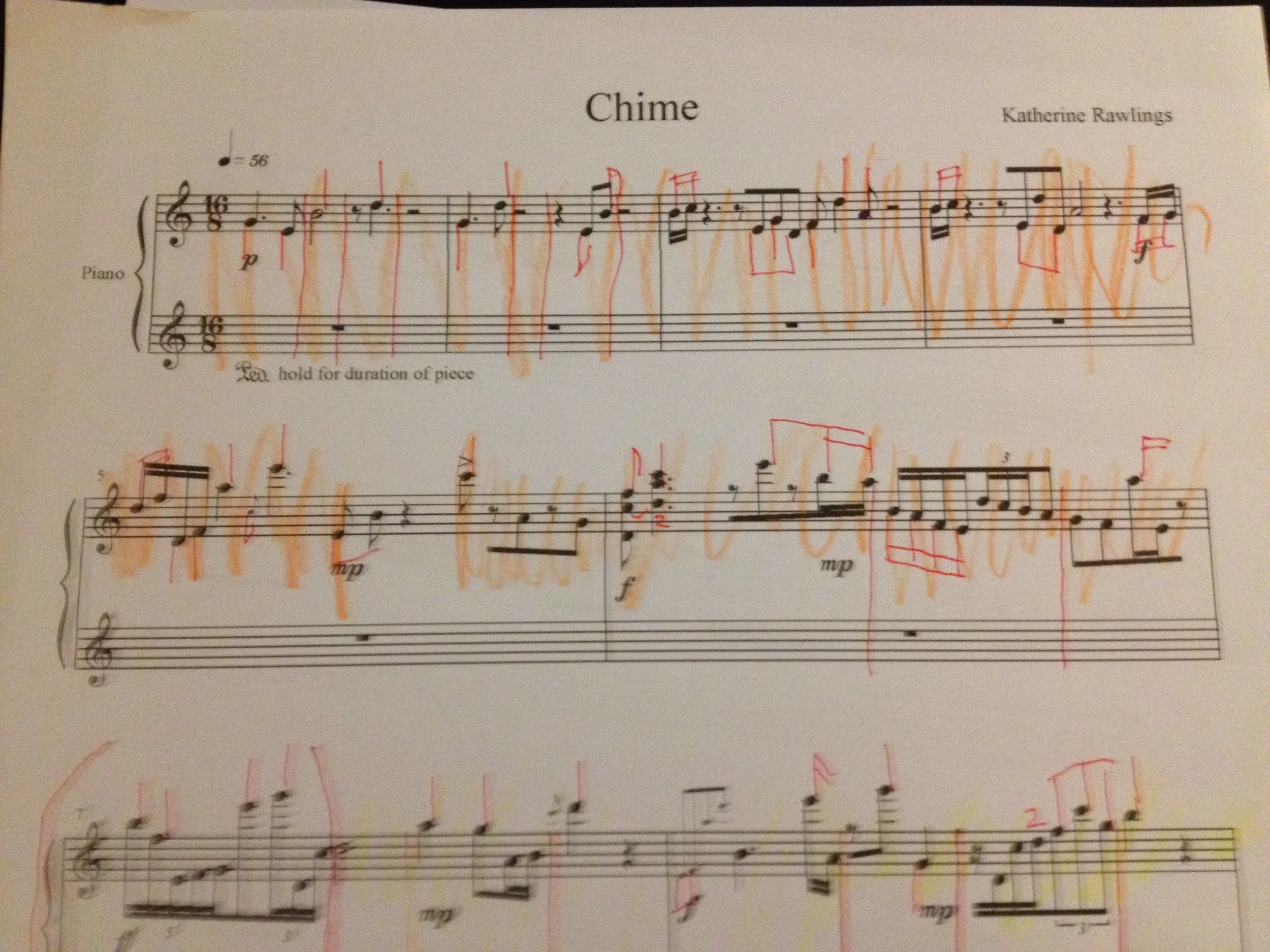
I can see three clear sections of music emerging. In order to make it easier to talk about the music I will refer to these sections as Section A: the beginning, Section B: the middle/main theme, Section C: the end. 

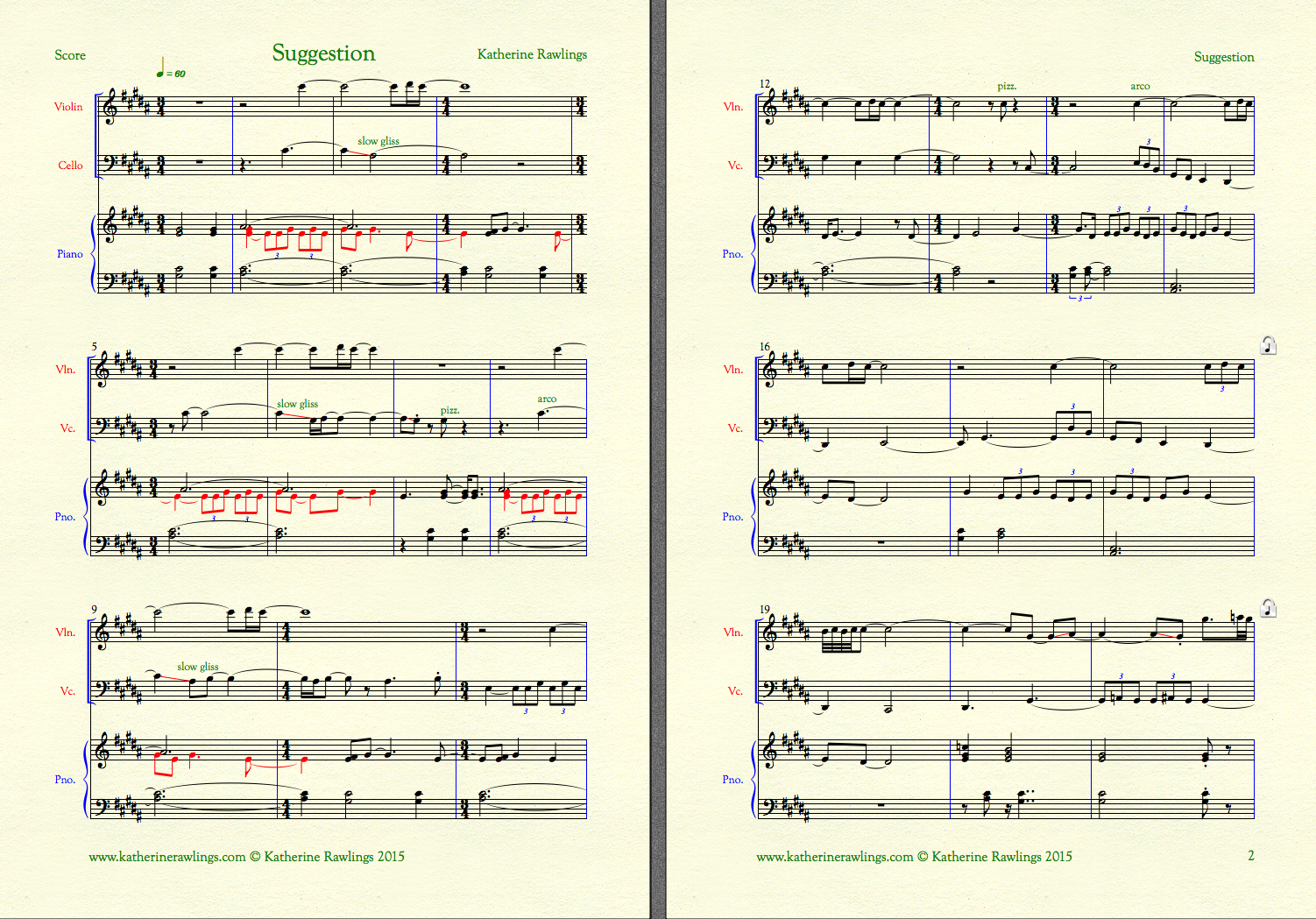
I worked on extending Section A today. I'm pretty happy with the way it sits at the moment. I still need to add bowing markings for the violin and cello part as well as dynamics (loud and soft markings), but aside from that I don't think I will want to change it too much. Here it is: 

Section A: the beginning.

Section A: the beginning.

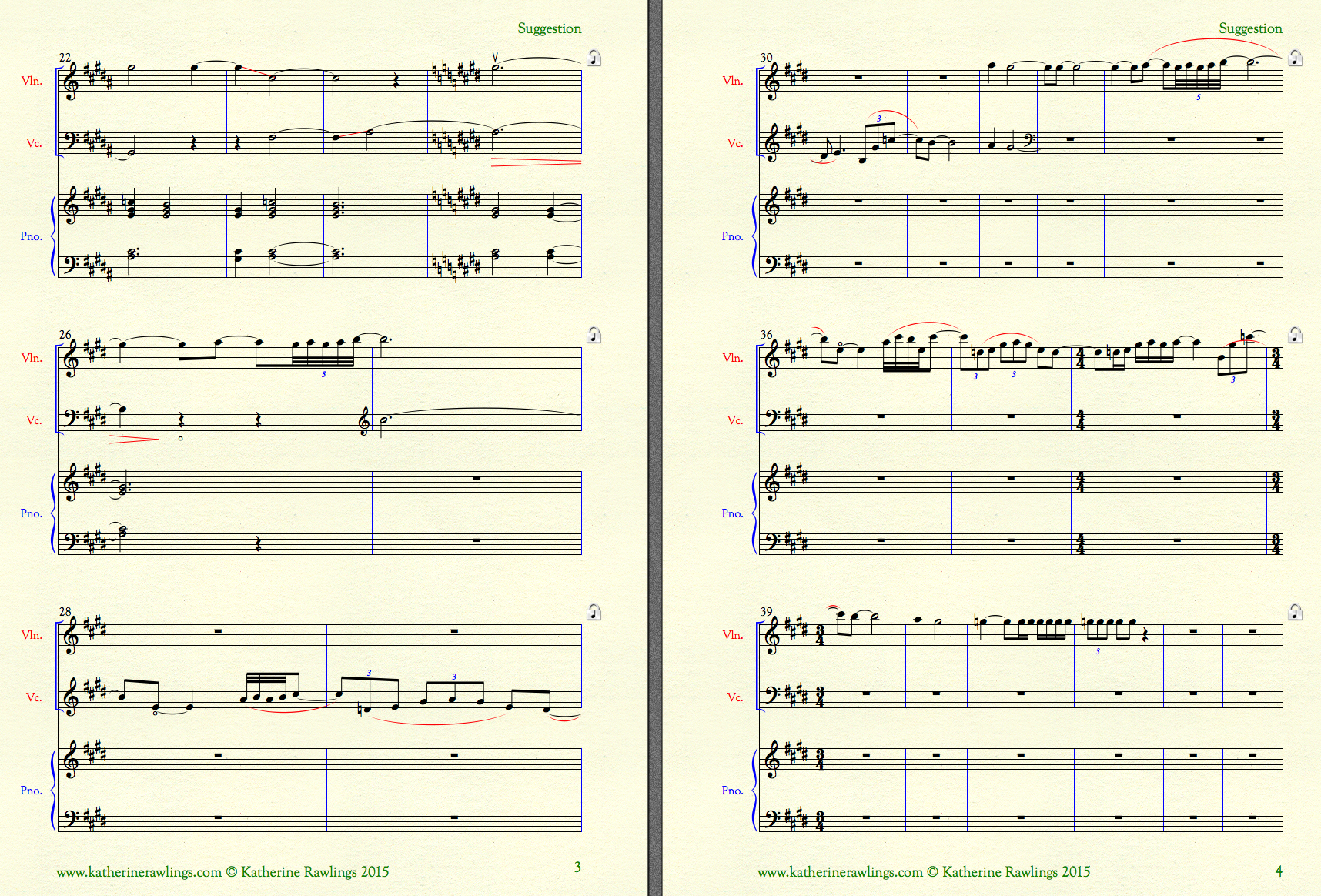
I'm also starting to try to think about how to fill out the music for Section B: the middle/main theme. I have a theme that I really like, but how do I compliment this theme without detracting from it and at the same time avoid making the music so sweet that it sounds clichéd. I want this section to sound beautiful and uplifting. I played around today with putting a soft piano accompaniment to the theme that sounds a bit "Philip Glass-y" with a regular fast rhythmic pattern that alternates between demisemi-quaver and semiquaver sextuplets. It sounds really cool but I'm worried that this accompaniment might overshadow the theme or make it sound too busy. I will do some more experimenting tomorrow but I also feel that it might be a good idea to take a step back and slow down a little. I feel like I've been trying to write too much and have forgotten to take small steps. I wonder if in taking smaller steps (and thinking about each individual note rather than the whole theme) I might be able to produce music that is closer to what I want. Here is and example of the "Glass-esque" Section B:  
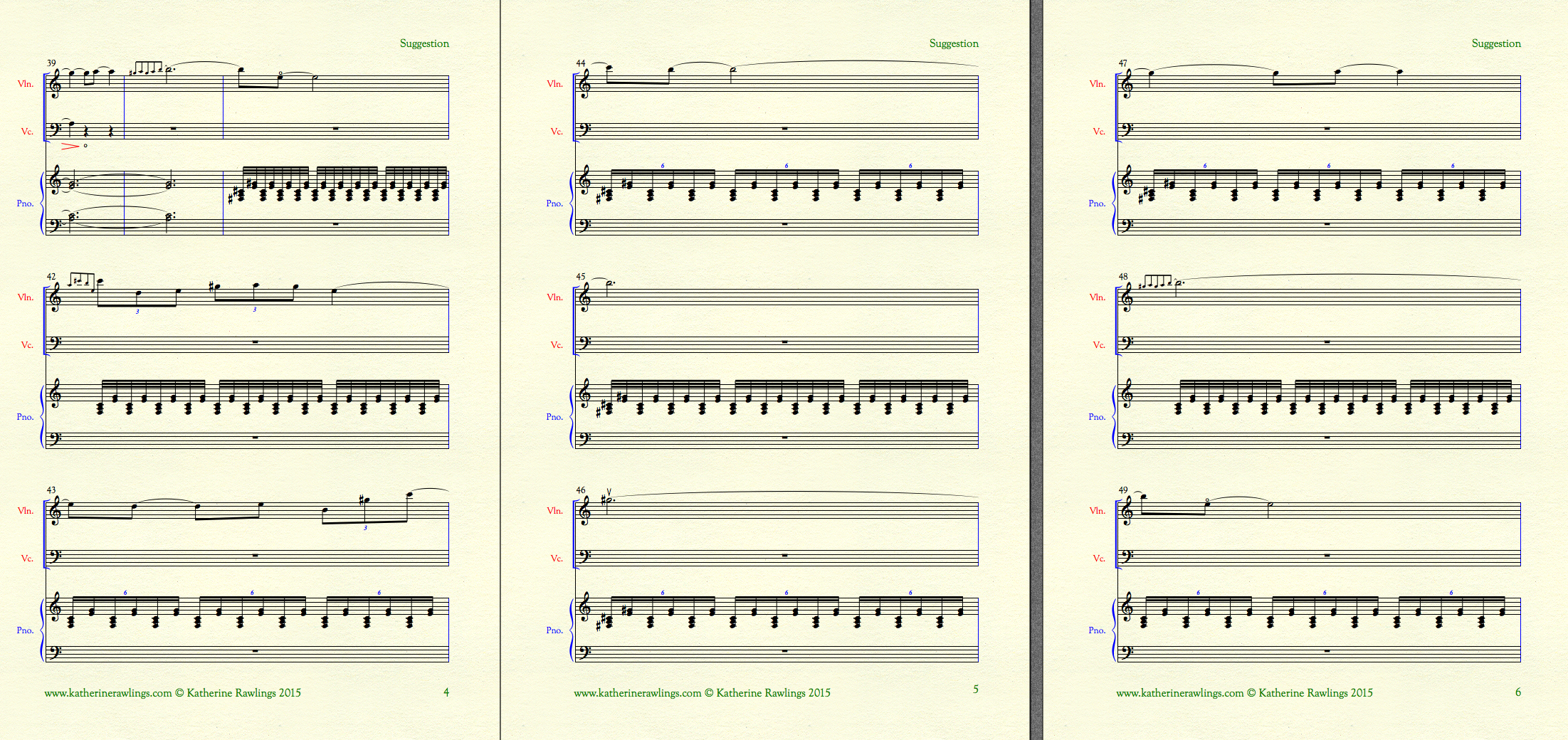
Example of Section B with "Philip Glass-y" piano accompaniment

Example of Section B with "Philip Glass-y" piano accompaniment

I also tried putting the main theme from Section B with the Section C accompaniment. This worked really well so I may use this: 

Example of Section B theme with Section C piano accompaniment. 

Example of Section B theme with Section C piano accompaniment. 

Posted
AuthorKatherine Rawlings

Today I worked on extending and simplifying the rhythm of the main theme. It's not enough that it sounds good in MIDI playback. If you are writing for live musicians and you want your music to sound the way it should, make it as legible as possible. Make this a priority. If it looks complicated, this doesn't necessarily mean you've written highly advanced music, it might just mean that you've notated it badly. Always make sure the rhythmic pulse (eg. 3/4 time) you want is clear in the notation. Your performers will appreciate you more if you do this.   

Posted
AuthorKatherine Rawlings

Though I wasn't physically able to sit down and write music over the last few days, I was still thinking about my music and playing the main musical theme from "day 9" in my head over and over as often as I remembered to do so. I did this so that the theme and the way the theme sounds becomes as familiar to me as possible. This familiarity helps when expanding the theme or adding harmony in the other instruments. 

Today as I sat down to write, I started playing around with the main (day 9) theme on the piano. The notes around this theme evolved into what I envision as an accompaniment for the other interments and a conclusion for the piece. It's often easier not to write the music from start to finish but rather to write different sections. I have a beginning, I have a theme for the middle and I now have an accompaniment for the end. This may all change enormously as I develop the music further, but it's good in these early stages to have some semblance of a structure and an idea of where the music may be heading. 

Posted
AuthorKatherine Rawlings
 
Shek O beach Hong Kong 16th January 2015

Shek O beach Hong Kong 16th January 2015

Shek O beach Hong Kong 16th January 2015

Shek O beach Hong Kong 16th January 2015

Posted
AuthorKatherine Rawlings

Back to the hard slog. I'm working on expanding the theme and repeating the theme in variation. Then I will work on filling out the music. This should take a few days. Small steps!!..(page 1 & 2 unchanged from "Day 8" post).

Posted
AuthorKatherine Rawlings
 
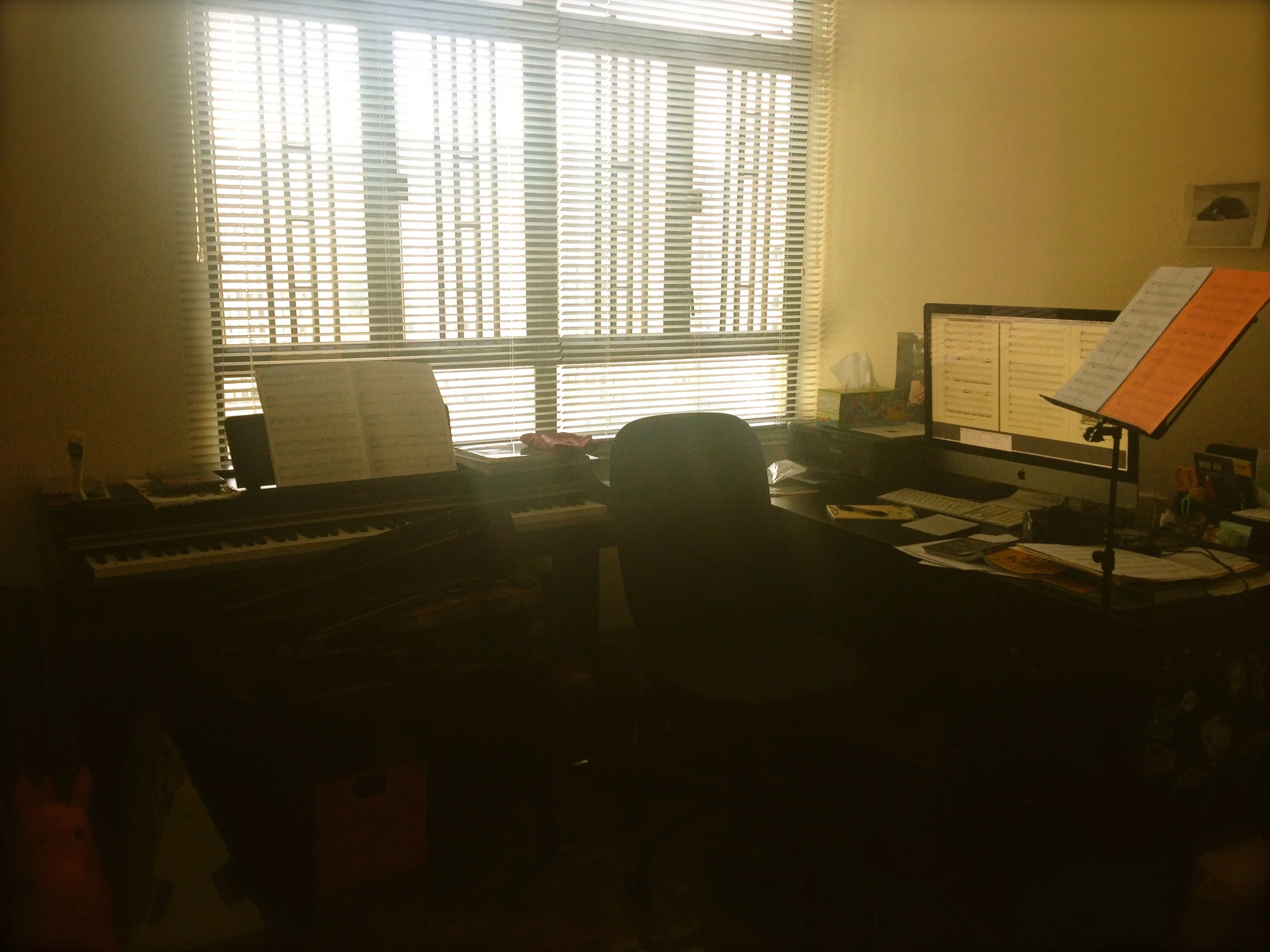
My shared workspace in Hong Kong/communal living area. 

My shared workspace in Hong Kong/communal living area. 

Sometimes I play the piano to come up with an aspect of music that I want to develop. Often it's a good idea to step away from the piano however, to get fresh ideas and to avoid the tendency fingers have of favouring particular uninspiring patterns or clichés. When I improvise on the violin, the patterns my fingers produce (being less chordal and more thematic) often have greater success in producing a fragment of music that inspires me to write more. When this happens, it's like a missing piece of jigsaw is found and something falls into place. I know it when I hear it, this is what I want. It's often hard to find this "spark of inspiration" but when it happens, the compositional process changes. I am no longer blocked or struggling with the fear and weight of the unknown. A new energy takes over and I now feel a sense of urgency to get the music on paper before it disappears.

Posted
AuthorKatherine Rawlings

Feeling stuck. Some days I'll spend enormous amounts of time and come up with little, other days things flow with little effort. Today I'm attempting a new section in the piece. A change of key and a change of mood. A new section can feel like a new piece. I don't know where the music is going and I feel blocked by the uncertainty.    

Posted
AuthorKatherine Rawlings

When I was studying composition many years ago at Melbourne Uni (to complete my undergraduate music degree) I had a few lessons with Brenton Broadstock. One of the things he said that stuck with me was (and this is not a direct quote) "If you write something that you like, repeat it". Though this seems like a very simple idea, I have never forgotten it and often thought about repetition when writing new music. A small phrase, a chord progression, a musical gesture. If there is something that stands out in your music that you like, don't just allow it occur once, repeat it. People instinctively like what they know, or what is familiar. In repeating a passage or fragment of music you inadvertently make the music more familiar to the listener. 


Posted
AuthorKatherine Rawlings

Day four of new piece. It's both exciting and scary not knowing where the music is going. I feel like I'm having to continually push feelings of doubt and fear to the back of my mind. Instead I'm just focusing on writing what feels right. I've always felt as though I have to have some great forethought about what I was going to do with my music before I attempted to write, but honestly, this has rarely been the way I've approached writing music. 


Posted
AuthorKatherine Rawlings

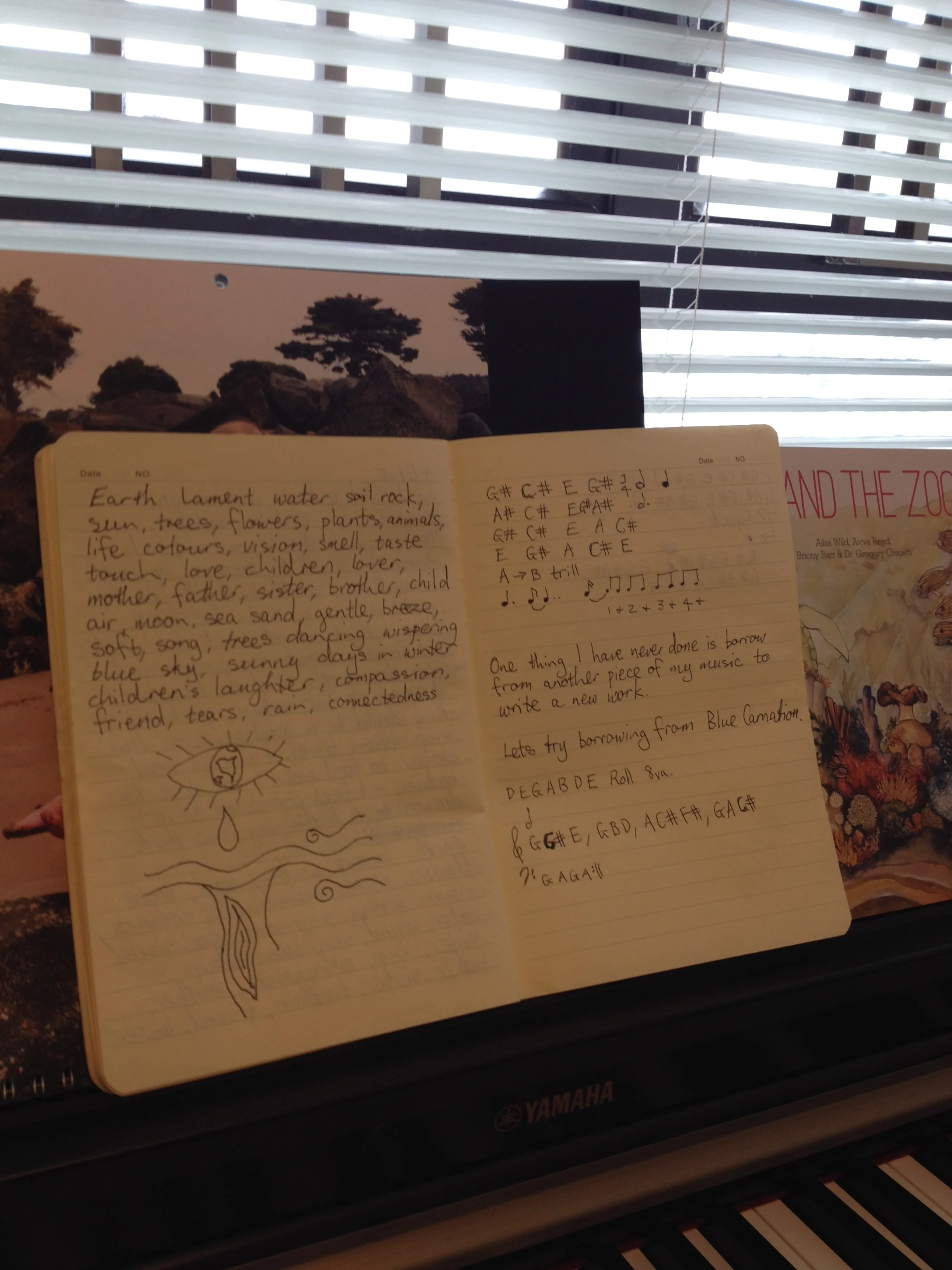
Writing a new work with a small steps approach (see older post for previous development). 

© Katherine Rawlings 2015

Posted
AuthorKatherine Rawlings
 

Today I set myself the goal of writing 4 bars of music. It sounds small I know, but my new approach to everything I do in life is to take small steps. So small you can't fail. For someone like myself with a perfectionist's mentality, this approach is very useful. I got the idea from a book I bought recently called "One Small Step Can Change Your Life - the Kaizen Way" by Robert Maurer. The basic premise is that in taking lots of small steps your productivity ends up being greater than if you try taking large steps. If you make the steps so small you can't fail, there is no resistance by the brain to the new behaviour, and in the end these little steps add up to become an enormous achievement. This is just my very basic summary of what I've taken from the book. There is so much fear that many artists associate with creating a new piece of work - what I call the blank page syndrome (or writers block), having this new approach of small steps has been really useful in keeping the fear at bay and creating a feeling of more freedom to explore. 

Here are the bars of music I came up with...

When I was in my late teens I would have said that my favourite composer of piano music was Debussy. I loved playing and listening to his music and I loved impressionist composers. I notice there are often fragments of this sound in the music I write. 

Posted
AuthorKatherine Rawlings
 
Screenshot 2015-01-02 16.17.15.png

I don't usually play computer games. They either make me feel too anxious or I come away from them feeling guilty that I've just wasted a block of time that could have been better spent enriching my life. I never feel guilty after playing Monument Valley, on the contrary when I play this game, I feel like I've participated in the unfolding of a beautiful children's book, it doesn't make me stressed or anxious and I feel happy playing it. Never thought I'd be able to say this about a computer game.

http://www.monumentvalleygame.com

Posted
AuthorKatherine Rawlings

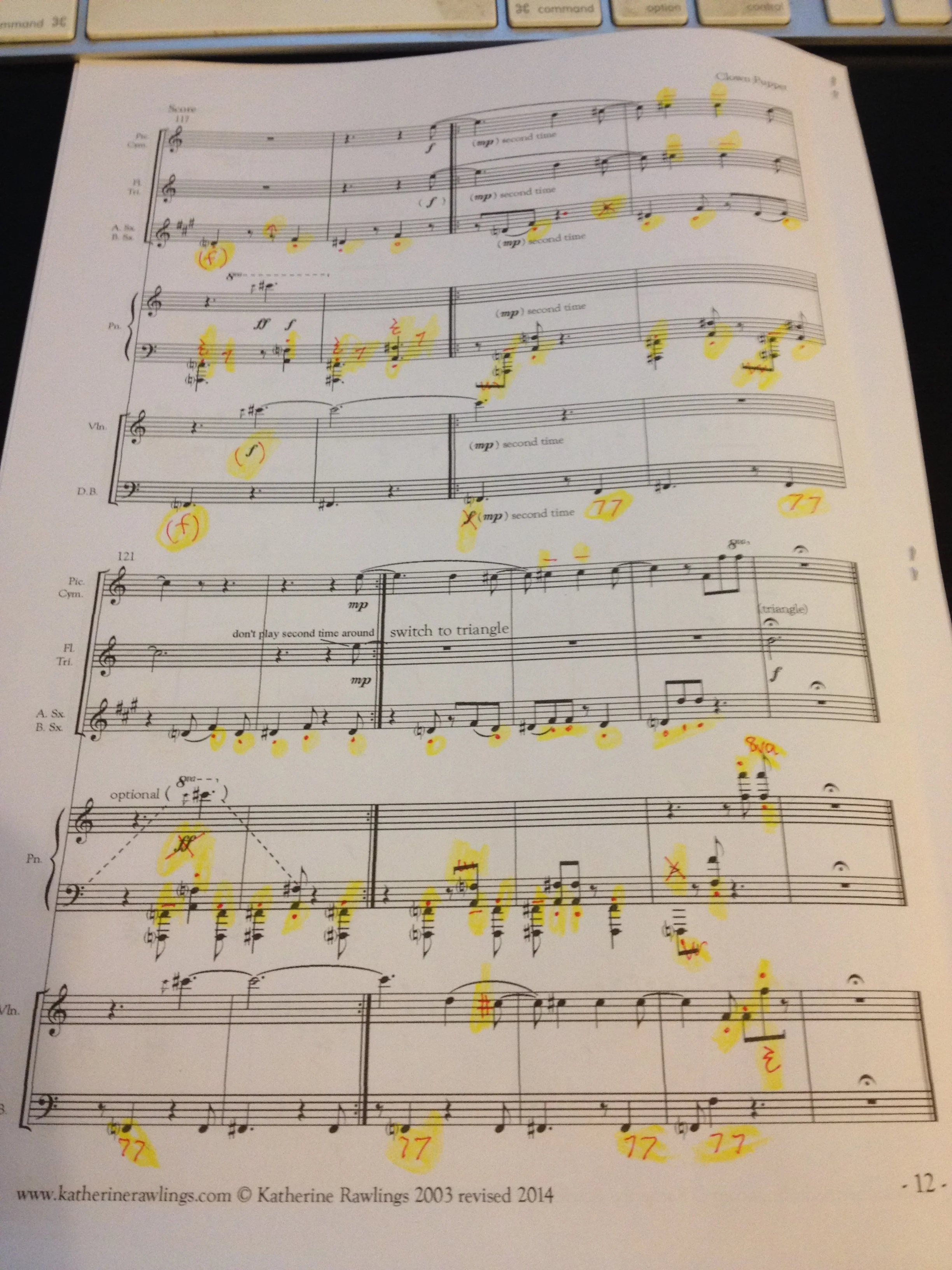
Just finishing up the final edits for "Clown Puppet" for mixed ensemble. Stay tuned. I will be uploading the score and parts shortly. 

Posted
AuthorKatherine Rawlings

In answer to your question, "What is that inspires you to write a new piece? Which things of Hong Kong have been an inspiration for you?" The thing that has been the biggest influence on my writing music is time. Having the time to write. Evie has started kinder (they start them young over here, she's only 2) which means I'm not looking after her all the time, I'm also not teaching, and I used to teach a lot in Melbourne. I have few friends here and no family, and so composing is what I do to keep myself busy. But the things that inspire me to write aren't influenced by Hong Kong so much, they are a lot more influenced by my friends and artistic connections like yourself. What kickstarted me back into composing was a friend who came to visit HK from Melbourne. I wrote a piece for her back in 2003 for her Masters Performance Recital. She suggested that I rewrite the same piece for percussion duo to make it accessible to more percussionists (and less difficult to play). I jumped at this idea and it seemed to snowball on from there. I get the occasional email from friends asking for music, and this gives me motivation to continue. I struggle to create just for myself. I want to connect with people, and so peoples interest in my music is what inspires me to write.  I guess you could say that living in Hong Kong has inspired me to write because of the isolation I feel from living here. I feel starved of connection, and so my music is an attempt to reconnect in someway. This is not meant to imply that Hong Kong is a lonely place. It is a friendly and vibrant city, but I miss my home in Melbourne. 

Posted
AuthorKatherine Rawlings

I once had coffee with a friend of a friend who was visiting Australia from Germany. He didn't know anyone in Australia and so I was meeting him as a favour to my friend. As we were strangers meeting for the first time, we were talking to each other about our interests and what we do. I told him about my music and my work as a composer. I had a CD of my music that I had recently produced. He asked me if he could have a copy of the CD. I told him it was $20. He told me that he felt strongly that art should be free and that people shouldn't have to pay for art. I don't remember anything else of the conversation. I got so angry that I couldn't compose myself. I apologised, told him he had offended me and then said that I had to leave. I never saw him again but I have never forgotten this encounter or the effect that it had on me. I often think about his statement that art should be free. Especially as I strongly feel the burden of how much my art costs me. Art is never free, it can not be. It costs the artist, not only in thousands of hours of time, it also costs them enormous amounts of money. Hundreds of thousands of dollars have been invested in my art. I have been learning music since I was 4. Two instruments. The instruments cost money, the lessons cost money, the transportation, the school fees, the university fees, the materials needed, computer, software, software upgrades, hardware upgrades, paper, online subscriptions, website costs, performer fees, venue fees, costs of advertising concerts, fees for recording, fees for producing and publicity. These are all just a few of the costs that went towards producing that one CD. Yes that CD that I said was $20, actually cost me, the artist, more than he could possibly imagine. So while some may feel strongly that art should be free. I feel strongly that this idea is not possible. As much as I would like to "break even" when it comes to my art and what I do, or even (God forbid) make money. It is attitudes like this, or just the failure to understand the big picture, that will continue to starve artists of their will to keep being artists. 

Incidentally, you can listen to the music from the aforementioned CD "for free" here.

Posted
AuthorKatherine Rawlings

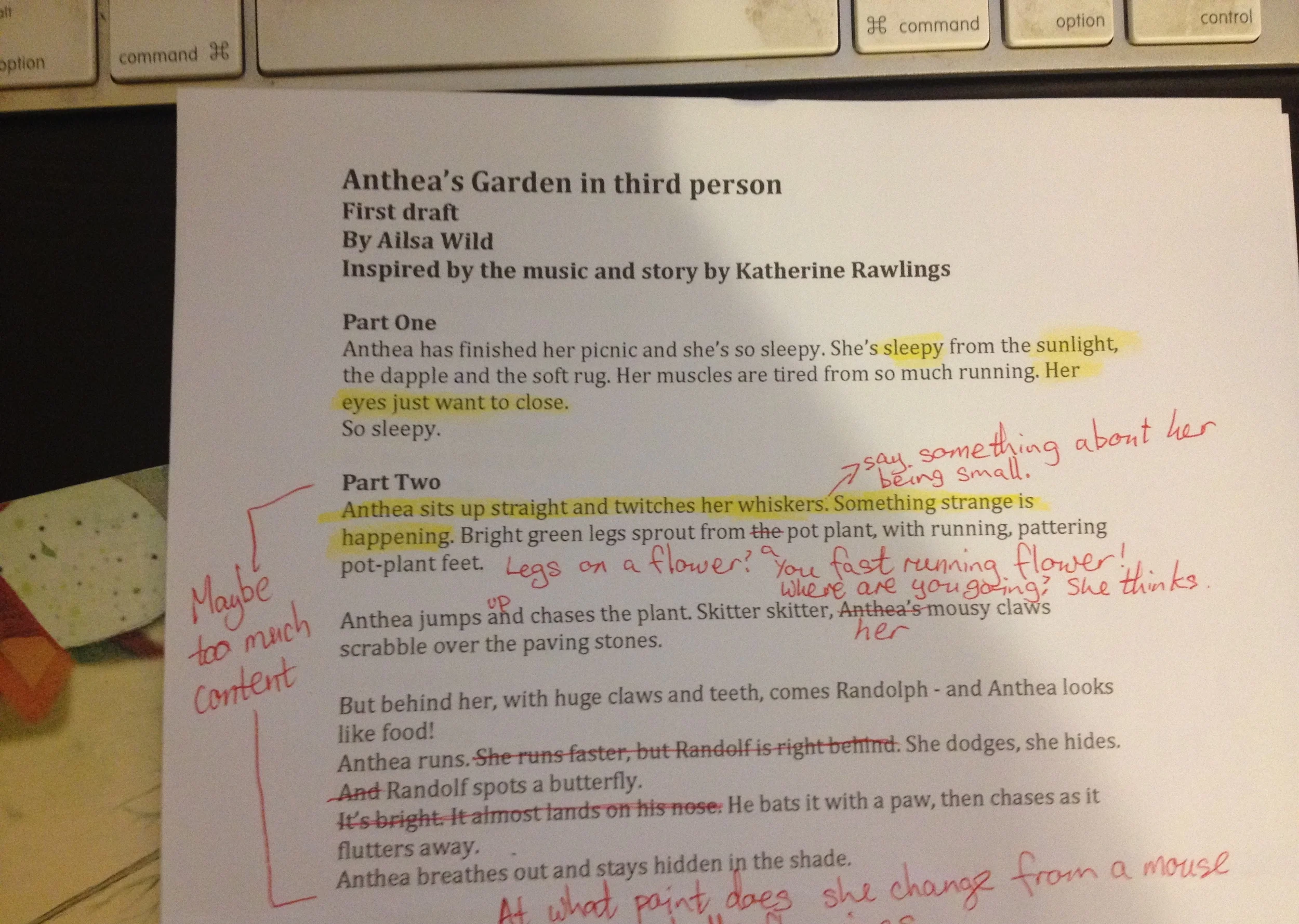
Feeling very honoured to be working with Ailsa Wild on my baby project "Anthea's Garden" - children's picture book. Ailsa just sent me through a rough first draft, and I'm loving the content. Here is a teaser of what she sent through, with my manic excited editing ideas and scribble on top. Your words are beautiful Ailsa, so excited to be working with you. We will be crowd funding for this book in August 2015, and it will be coming out October next year. Check out http://www.pozible.com/project/187995 to see more about Ailsa and her most recent book.

Posted
AuthorKatherine Rawlings

Nov 12 

I love your Blue Carnation for solo violin, Katherine.  Forgive me if I think it sounds like the northern lights of Canada."

Barbara Hart - The Northern Lights Quartet


Posted
AuthorKatherine Rawlings